The Soul Is Still There
Inside Wilmington’s historic Murphy Theatre, Tell Me Lies delivered far more than a faithful night of Fleetwood Mac. In a room built for live performance, seven musicians reminded an audience what these songs can still become in the hands of a great band.
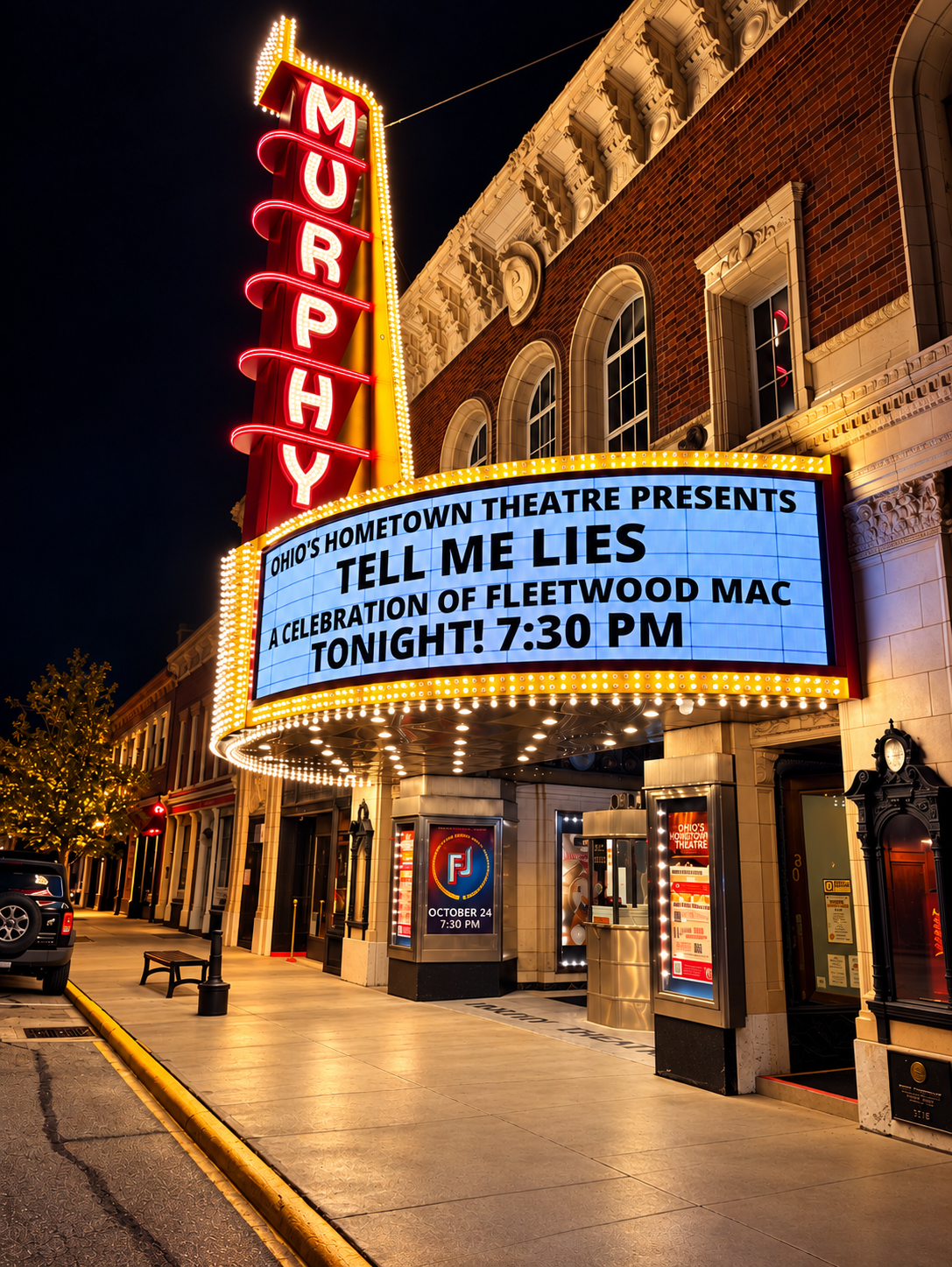
The Murphy Theatre marquee on September 26, 2026, before Tell Me Lies took the stage in Wilmington, Ohio.
There are venues where you go to see a show, and there are venues that become part of the show.
The Murphy Theatre in Wilmington, Ohio, belongs firmly in the latter category.
Its marquee rises over Main Street with the confidence of a theater that has been there for more than a century. Inside, the marble floors, ornate plasterwork, gilded details, balcony, opera boxes and arched ceiling belong to another era of American entertainment, when theaters were designed not simply to contain a performance but to announce that attending one was an occasion.
On Saturday night, September 26, 2026, the Murphy once again became exactly what it was built to be.
Onstage was Tell Me Lies, a seven-piece Fleetwood Mac tribute that had come to Wilmington with an enviable assignment: spend an evening playing some of the most enduring songs in rock music.
That also happens to be a dangerous assignment.
Fleetwood Mac’s catalog is so familiar that audiences don’t merely know the songs. They know the details. They know where the harmony enters. They anticipate the guitar line. They recognize a drum fill before it resolves. They know the bass line that is coming long before anyone plays it. Decades of listening have made the recordings reference points against which almost any live performance will inevitably be measured.
Tell Me Lies doesn’t run from those expectations. It meets them with musicianship.
Over two sets and an encore, the group delivered the Fleetwood Mac songs an audience would reasonably demand—“Dreams,” “Rhiannon,” “Landslide,” “Go Your Own Way,” “The Chain,” “Silver Springs”—alongside selections that reached deeper into the catalog. There were moments of familiarity, moments of genuine surprise, and several opportunities for individual members of the band to step forward and demonstrate that the talent onstage went well beyond the ability to faithfully reproduce a famous recording.
By the end of the evening, one thought was difficult to shake.
The soul of Fleetwood Mac is alive and well. And on this particular Saturday night, it could be found inside the Murphy Theatre.
A Theater Worth Seeing
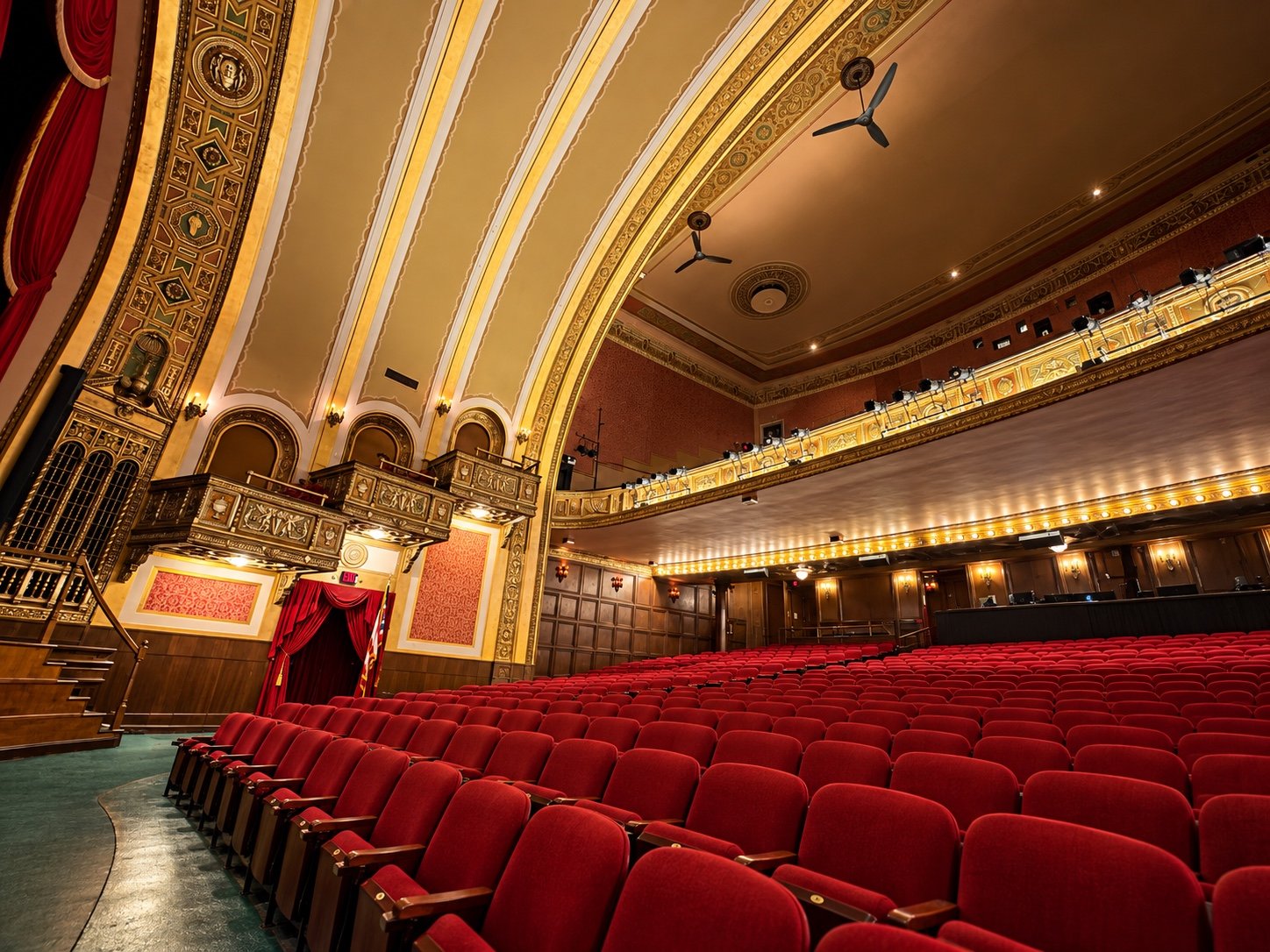
The Murphy's intimate auditorium pairs red seating and dark wood with an ornate proscenium, balcony and vaulted ceiling.
The Murphy has been standing in downtown Wilmington since 1918, but its history begins with three brothers and, principally, Charles Webb Murphy.
Murphy’s career had taken him from a Cincinnati pharmacy to sportswriting at the Cincinnati Enquirer and eventually into ownership of the Chicago Cubs, including during the team’s 1907 and 1908 World Series championships. Along with his brothers Frank and James, he turned his attention toward creating something lasting in Wilmington. Construction began on October 13, 1916, and the Murphy Theatre opened on July 24, 1918. The original house contained 984 seats—688 on the main floor, 203 in the balcony and another 30 in mezzanine boxes.
The craftsmanship matched the ambition. English craftsmen performed the stonework. Italian artisans were responsible for the ornamental plaster. J.L. Dillon of Chicago’s Mandel Brothers designed the interior. The result was not simply a room containing a stage, but a theater intended to look and feel important.
More than a century later, much of that feeling remains.
Today’s Murphy is an intimate 682-seat nonprofit venue, and intimacy may be one of its greatest assets. It is large enough for a performance to feel substantial without creating the distance that can make arena concerts feel detached. You are aware of the audience around you, but equally aware of the musicians onstage.
Then there is the room itself.
Look around and there are details everywhere: decorative wooden panels, ornate sconces, plaster medallions, chandeliers, burgundy curtains, golden opera boxes and the great arched ceiling above the auditorium. The Murphy doesn’t disappear when the lights go down. Its character remains present throughout the performance.
Yet the best thing that can be said about the Murphy is not that it has survived since 1918. It is that the place still works.
A historic theater can become so precious that it begins to feel like a museum. The Murphy doesn’t. It feels like a theater—one with considerable history and beauty, certainly, but still fundamentally a place where people buy tickets, settle into their seats, watch the lights come down and wait for somebody to play.
Tell Me Lies gave the room plenty to work with.
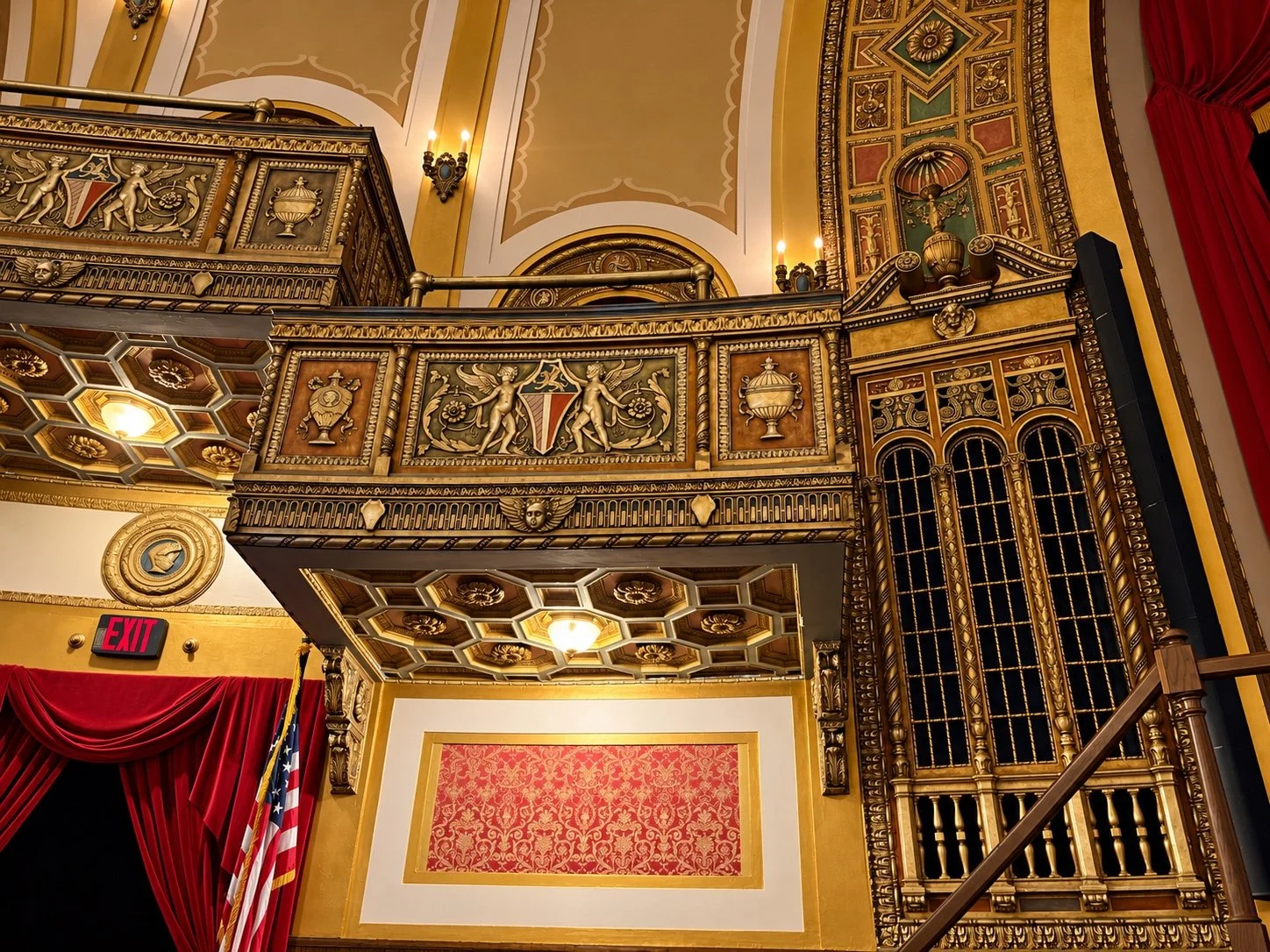
Ornamental plaster, gilded reliefs and the theater's historic boxes reward a closer look.
Let the Music Do the Talking
Tell Me Lies consists of Rachel Francis on lead vocals and tambourine, Elizabeth Jones on lead vocals and percussion, Sean Williams on guitar and vocals, Mike Francis on drums and percussion, Tom Richards on keyboards, vocals and percussion, Jeff Johnson on guitar, and regular bassist Chris Monteleone. For the Wilmington performance, however, the bass chair belonged to the band’s regular substitute bassist, John Dolceamore, who proved more than ready for the assignment.
The band’s philosophy is refreshingly straightforward. Tell Me Lies performs completely live without backing tracks and uses four-part harmonies and carefully constructed arrangements to capture Fleetwood Mac’s sound. The group explicitly rejects the idea that a tribute requires wigs or gimmicks. The goal is not to convince an audience that the people onstage actually are Fleetwood Mac.
That decision serves them well because it allows the music—and eventually the musicians themselves—to become the focus.
The first set opened with “Monday Morning” and moved quickly through “You Make Loving Fun” and “Over My Head.” From there came “Seven Wonders,” “Sara” and “Second Hand News,” followed by “Gold Dust Woman.” “Bleed to Love Her,” “Big Love,” “Hold Me,” “Little Lies” and “Tusk” rounded out a remarkably broad first half before “Silver Springs” brought the set to a close.
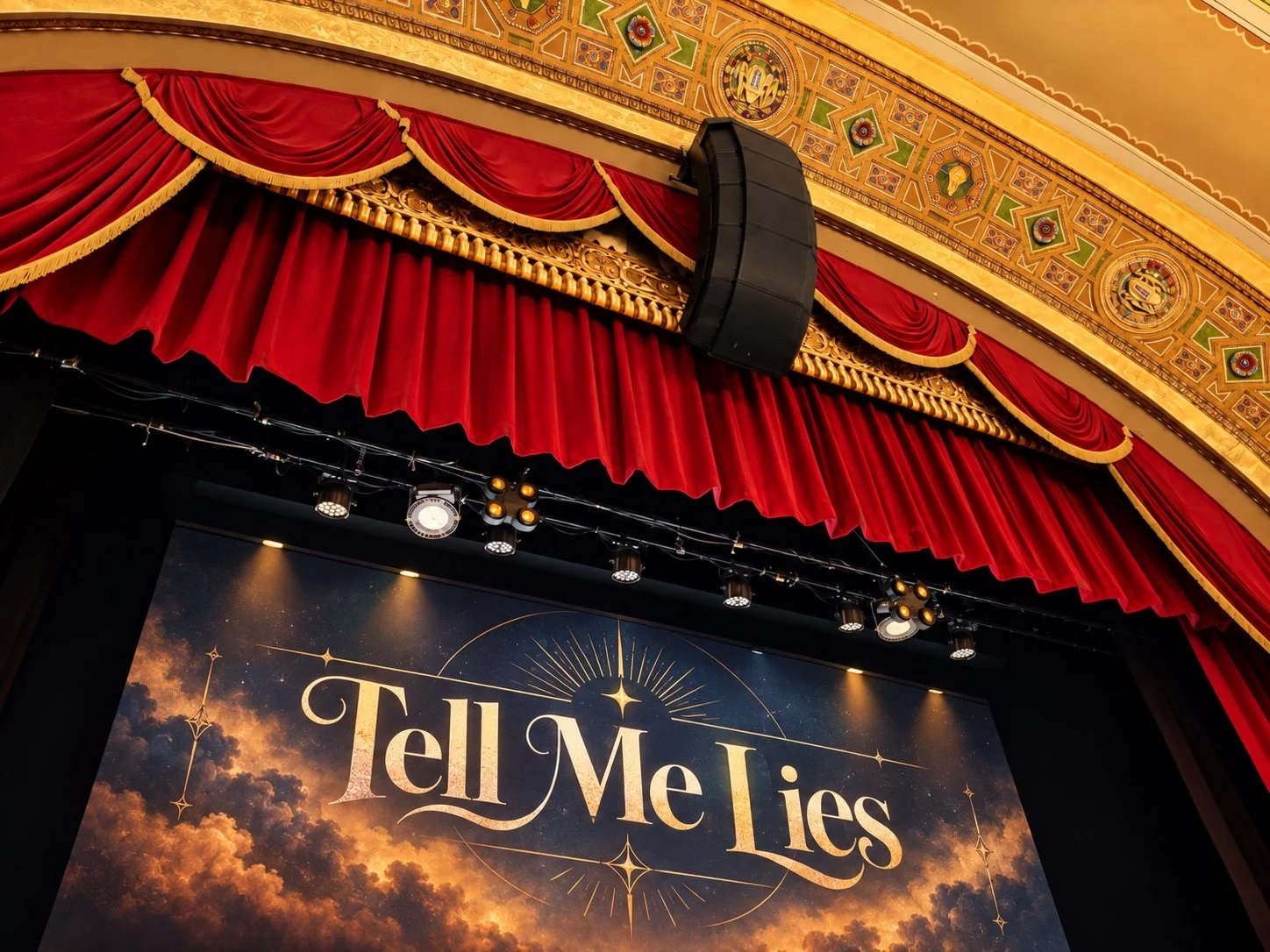
The ornate Murphy proscenium frames the Tell Me Lies stage before the performance.
The breadth matters. A Fleetwood Mac tribute could build an easy evening almost entirely from the unavoidable hits. Tell Me Lies doesn’t settle for that. The selections move among different periods of the band’s history and, more importantly, among the distinctive musical personalities that made Fleetwood Mac such an unusual group.
That requires vocalists capable of moving through very different material.
Tell Me Lies has them.
Two Voices
If the band has a defining strength, it may be the combination of Rachel Francis and Elizabeth Jones.
Both are powerful singers individually. Together, they create something more compelling.
Francis handles the material most closely associated with Stevie Nicks, while Jones brings the Christine McVie side of the catalog to the stage. Those roles naturally invite comparisons with the original singers, but focusing exclusively on imitation misses what was happening at the Murphy.
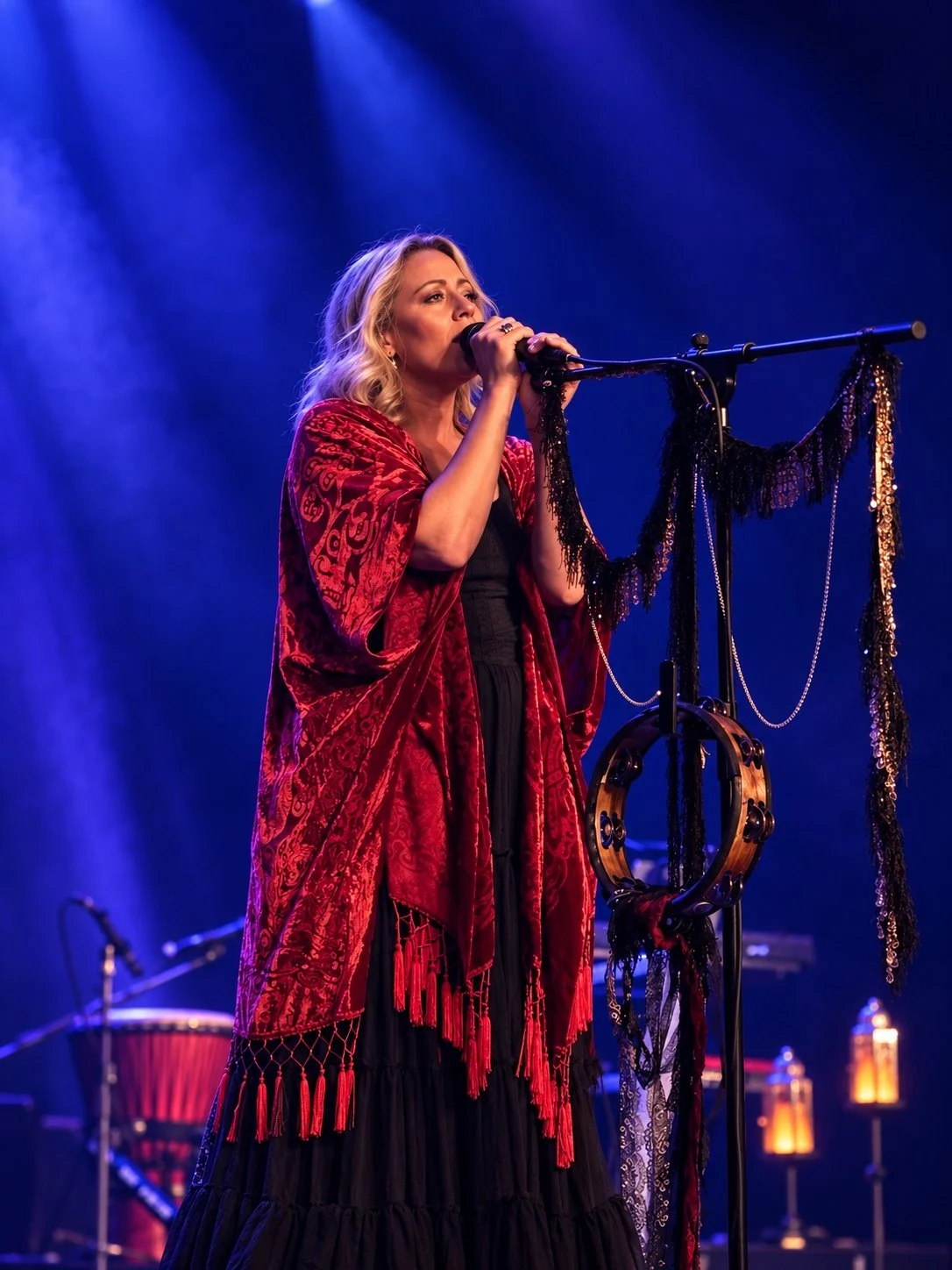
Rachel Francis, whose power and control - particularly on sustained notes - became one of the evening's standout elements.
Francis and Jones have genuine vocal chemistry.
Their voices remain distinct when they sing together rather than collapsing into a single blended sound, and that distinction gives their harmonies depth. One voice can lead while the other reinforces it; elsewhere they meet with enough power that the harmony becomes one of the dominant sounds in the room. There is also an obvious sense that each singer is listening to the other. They know when to step forward and when to leave space.
Fleetwood Mac’s catalog gives them ample opportunity to demonstrate it. Songs such as “Dreams,” “Rhiannon,” “You Make Loving Fun,” “Little Lies,” “Everywhere” and “Silver Springs” ask different things from a vocalist, and the contrast between Francis and Jones becomes one of the pleasures of the show rather than something the band tries to minimize.
Francis is particularly impressive when a song gives her room to stretch. Several times during the evening, she leaned into sustained notes and simply held them. There was power behind them, but also control—the kind of moment that can expose a vocalist as easily as showcase one. Francis seemed perfectly comfortable there, letting a note hang over the room without appearing anxious to find the next breath.
Those moments became some of the evening’s most memorable because they weren’t simply exercises in sounding like Stevie Nicks. They sounded like Rachel Francis.
That distinction became increasingly important as the night went on.
One Man, One Guitar
Sean Williams had his own opportunity to step outside the larger ensemble during the first set.
The song was “Big Love.”
Fleetwood Mac released “Big Love” on 1987’s Tango in the Night, but the song eventually developed a second identity onstage. Lindsey Buckingham stripped away the heavily produced character of the studio recording and reworked it into a ferocious solo acoustic performance.
Before Williams began, the audience was given some context about just how different the live treatment had become from the album version.
Then the rest of the band got out of the way.
Williams was left alone with an acoustic guitar.
It was one of the best decisions of the evening.
Without a rhythm section, keyboards or another guitarist underneath him, Williams had nowhere to disappear. The arrangement demands that one instrument carry an enormous amount of information at once. Rhythm, melody and momentum have to come from the same pair of hands, while Williams still has to sing over what he is playing.
He delivered.
“Big Love” became less a recreation of a Fleetwood Mac recording than a showcase for the guitarist standing onstage at the Murphy. It was technically impressive without feeling like an exercise designed merely to demonstrate technique, and it provided one of the clearest examples of why Tell Me Lies works.
The songs may bring you into the room.
Eventually, the musicians make you pay attention to them.
The Drummer Gets His Turn
After intermission, the second set opened with “World Turning.”
This time, it was Mike Francis who got the spotlight.
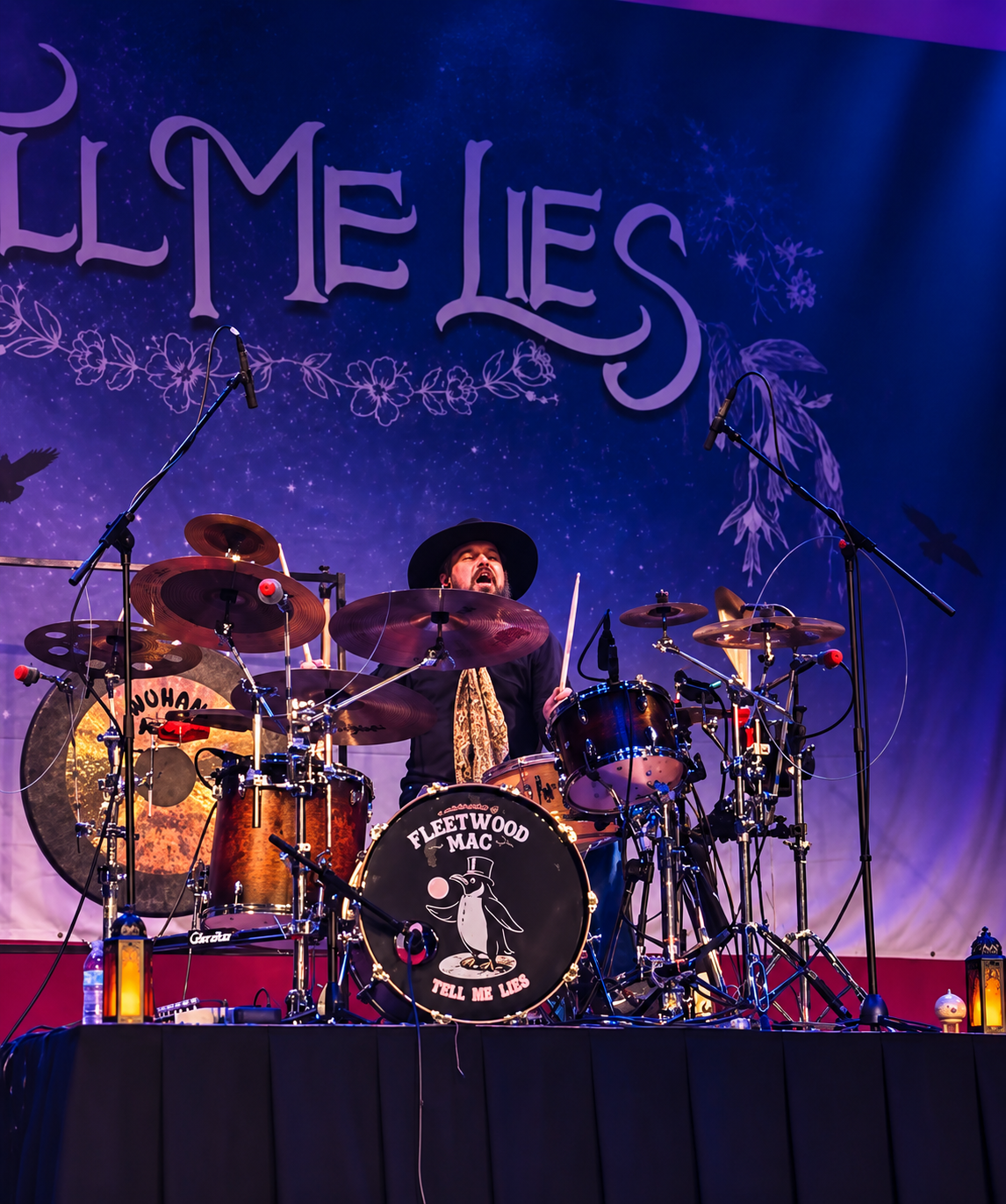
Drummer Mike Francis lays down an outstanding solo during World Turning.
Drummers spend most concerts physically positioned behind everyone else, essential to nearly everything happening onstage but rarely occupying the audience’s undivided attention. Francis’s feature changed that arrangement.
For several minutes, the rhythm section became the show.
His solo was forceful, theatrical and technically impressive, but more importantly, it worked in the context of the evening. By this point, Tell Me Lies had already demonstrated that it could handle Fleetwood Mac’s vocal arrangements and guitar work. Francis’s moment made it equally clear how much musicianship was sitting behind the kit.
Then the band returned to work, and the second set began delivering one recognizable song after another: “Everywhere,” “Dreams,” “Rhiannon,” “Say You Love Me” and “Go Your Own Way.” The band also stepped outside Fleetwood Mac proper for Stevie Nicks’ “Edge of Seventeen” before moving through “Landslide” and “Gypsy.”
By this point the audience knew exactly what kind of night it was having.
The Chain
Then came “The Chain.”
There may be no song better suited to demonstrating what Tell Me Lies does well.
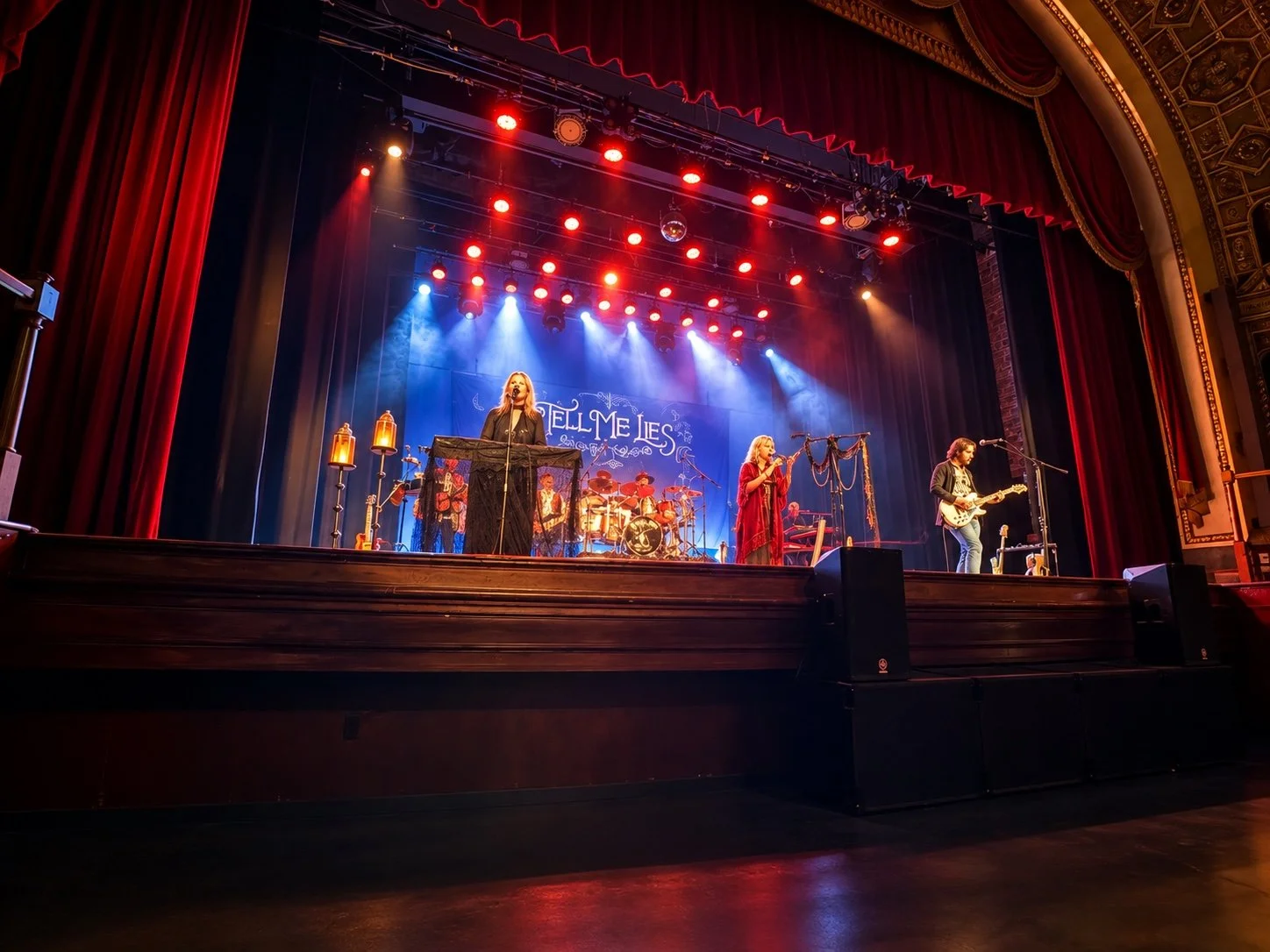
Tell Me Lies on the Murphy stage: seven musicians, playing live, with the theater itself providing an unforgettable frame.
“The Chain” is not simply a vocal song, guitar song or rhythm-section song. Everything matters. The voices have to work together. The musicians have to understand dynamics and restraint. The arrangement has to breathe.
And eventually, inevitably, comes that bass line.
Everyone knows it is coming.
That anticipation is one of the peculiar pleasures of seeing beloved music performed live. Surprise isn’t necessary. Sometimes the satisfaction comes precisely from knowing what happens next and watching a band deliver it anyway.
On this night, that moment belonged to John Dolceamore. Filling in for regular bassist Chris Monteleone, Dolceamore had the unenviable task of delivering one of the most recognizable bass passages in rock music.
When the moment arrived, he nailed it.
The familiar line emerged from the quiet exactly as it needed to, drawing the song into its final movement as the tension built and the rest of the band came roaring back around him.
In a show filled with individual moments—Francis and Jones combining vocally, Williams alone with his acoustic guitar, Mike Francis commanding the stage from behind the drums—Dolceamore’s turn in “The Chain” provided another. Yet the song ultimately brings the focus back to the ensemble.
Seven musicians. One band. That is ultimately where Tell Me Lies is most convincing.
Don’t Stop
After “The Chain,” there was still one song left. Tell Me Lies returned for the encore and gave the audience “Don’t Stop.” There are more obscure choices they could have made and certainly less predictable ones. None would have been better.
An encore is not the time to prove how deep your record collection goes. It is the moment to send people home happy, and “Don’t Stop” accomplishes that almost immediately. The opening is recognizable, the chorus belongs to practically everyone in the room, and after more than 20 songs, Tell Me Lies no longer needs to demonstrate anything.
They can simply play. That may ultimately be the highest compliment to give this band.
Tell Me Lies begins the evening carrying the enormous weight of somebody else’s music. Every member walks onto the stage attached, at least temporarily, to one of the most famous bands of the last half-century. Francis will be compared to Nicks. Jones to McVie. Williams to Buckingham. Mike Francis to Fleetwood. And on this particular night, Dolceamore stepped into the bass role forever associated with John McVie.
But something happens over the course of the show. Those comparisons begin to matter less.
You notice Rachel Francis holding a note. You notice the sound Francis and Elizabeth Jones create together. You watch Sean Williams attack “Big Love” alone with an acoustic guitar. You watch Mike Francis take command of the theater from behind his drum kit. You hear Dolceamore bring “The Chain” into that unmistakable final movement. You hear Richards and Johnson helping construct the layers underneath it all.
Eventually, you stop watching seven musicians demonstrate how well they can imitate Fleetwood Mac.
You start watching Tell Me Lies. And that is why the evening works.
The Murphy deserves some of the credit. There could hardly be a better setting for this kind of performance than a beautiful, intimate theater that has spent 108 years welcoming entertainers to its stage. Charles Murphy envisioned the building as a gift to Wilmington, a place where future generations could gather for fine entertainment.
On September 26, 2026, that is precisely what happened.
There doesn’t need to be a larger lesson in it.
Sometimes a beautiful theater, a great collection of songs and seven exceptionally talented musicians are enough.
The lights came down inside the Murphy. Tell Me Lies took the stage. And for the next couple of hours, some of the most familiar songs in rock music sounded remarkably alive.
The soul of Fleetwood Mac is alive and well.
For one memorable Saturday night in Wilmington, Ohio, you could find it in Tell Me Lies.