A Whiskey Room Is Not a Bar
Why the purpose of a whiskey room is reflection, conversation, and listening—not consumption.
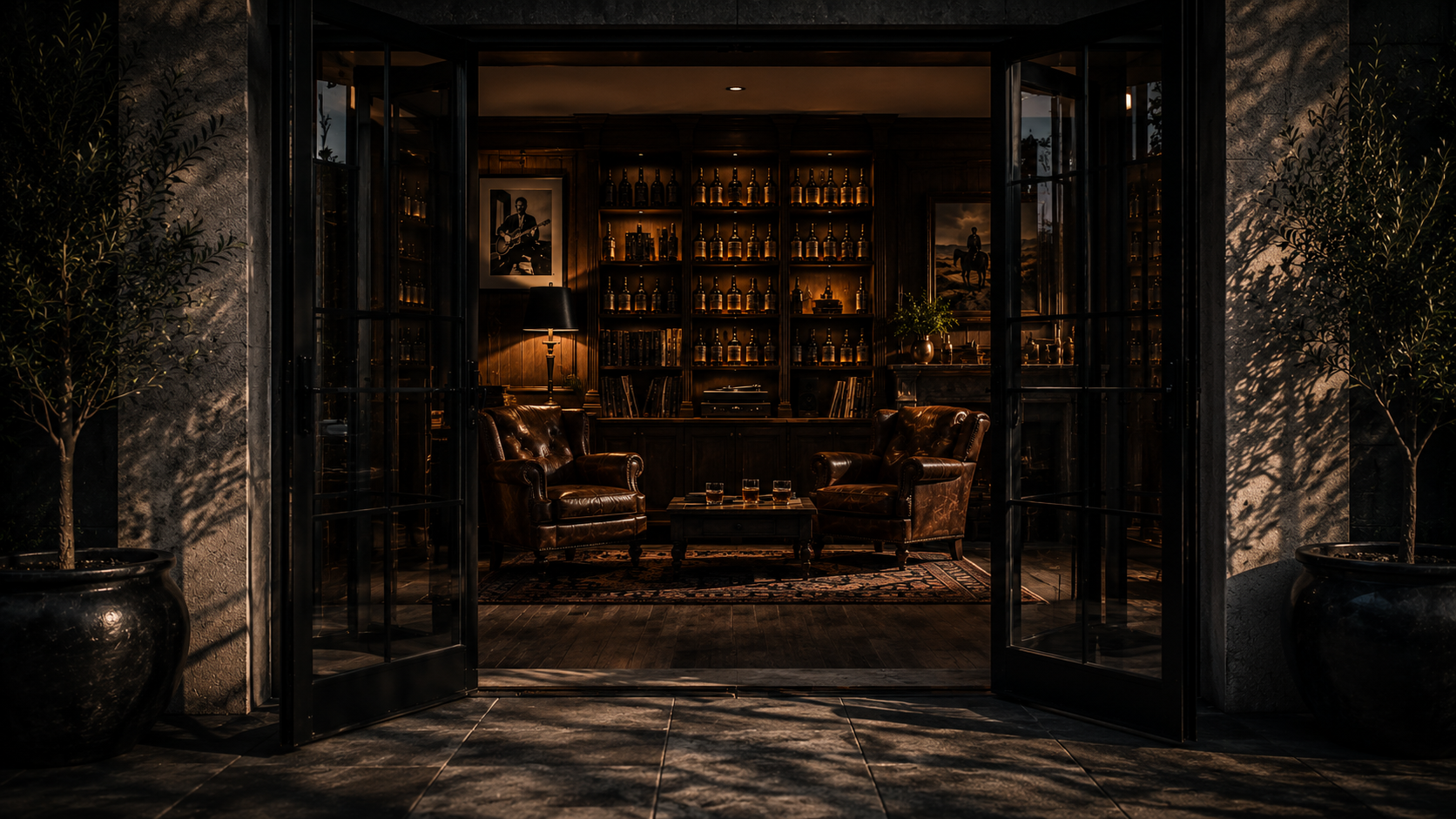
There is a peculiar thing happening in modern homes.
At a time when floor plans have become more open, technology more connected, and nearly every square foot is expected to serve multiple functions, people continue carving out spaces with remarkably narrow purposes. Basements become listening rooms. Spare bedrooms become libraries. Corners become cigar dens. And throughout the country, homeowners continue building whiskey rooms.
The trend is often explained through the language of collecting. People want a place to display bottles. They want a sophisticated entertaining space. They want somewhere to enjoy a bourbon after work.
These explanations are not wrong. They are simply incomplete. The most interesting thing about a whiskey room is not that it contains whiskey. It is that people continue creating them at all.
For all the discussion about shelving, lighting, leather chairs, and rare bottles, the whiskey room's true significance lies elsewhere. It belongs to a long tradition of spaces designed not for activity, but for attention. Its purpose is not consumption. Its purpose is presence.
A whiskey room is not a bar. It is something far older. Walk through enough historic homes and a pattern begins to emerge. Many contain rooms that have largely disappeared from contemporary life. Studies. Libraries. Parlors. Sitting rooms. Smoking rooms.
These spaces often strike modern visitors as inefficient. Why dedicate an entire room to reading? Why reserve a room for conversation? Why create a place where little seems to happen?
The answer reveals something important about how previous generations understood the home. Not every room existed to accomplish a task. Some existed to cultivate a state of mind. The study encouraged reflection. The library encouraged concentration. The parlor encouraged conversation. Their value was not measured by productivity but by the quality of attention they invited.
Over time, many of these spaces disappeared. Homes became larger in some ways and more consolidated in others. Open-concept living prioritized flexibility. Rooms became multipurpose environments capable of accommodating work, entertainment, dining, exercise, and socializing, often simultaneously.
There are obvious advantages to this arrangement. However, something was lost as well. When every space serves every purpose, fewer spaces suggest a particular way of being. The whiskey room represents an attempt—whether conscious or not—to reclaim that older tradition.
This is why the whiskey room should not be confused with a bar. The distinction is not architectural. It is philosophical. A bar exists to facilitate service. Its success depends upon movement. People arrive, order, gather, consume, and depart. The atmosphere may be lively, intimate, celebratory, or communal, but the environment is fundamentally organized around activity.
The whiskey room operates according to different principles. It is not designed around turnover. It is designed around lingering. The room asks nothing of its occupants except that they remain a while.
This difference may seem subtle. It is not. Modern life offers countless environments optimized for stimulation. Screens compete for attention. Notifications interrupt thought. Even leisure increasingly resembles work, measured through metrics, productivity, and constant engagement.
Against this backdrop, the whiskey room serves a countercultural function. It creates conditions under which nothing urgent needs to happen. That is increasingly rare.
Many whiskey enthusiasts eventually discover something surprising. The bottles matter less than they once did. This realization rarely arrives at the beginning. Most people enter the hobby through the objects themselves. They learn mash bills, proof points, age statements, warehouse locations, and distillation methods. They chase releases. They compare tasting notes. They hunt allocations.
The bottles provide a doorway into the culture. Eventually, however, something changes. Ask longtime enthusiasts about their most memorable pours, and the stories often have little to do with the whiskey itself. They remember the friend who shared the bottle. The conversation that lasted until midnight. The record spinning quietly in the background. The celebration. The loss. The life event attached to the glass. Memory has a curious habit of attaching itself to moments rather than objects. The whiskey remains important, but it increasingly becomes the occasion rather than the focus.
A good whiskey room recognizes this truth. It is not a shrine to bottles. It is a container for experiences. Perhaps this explains why whiskey rooms so often evolve into listening rooms. Shelves of records appear beside shelves of bourbon. Turntables find homes near decanters. Carefully selected speakers occupy positions of honor. The room develops a soundtrack.
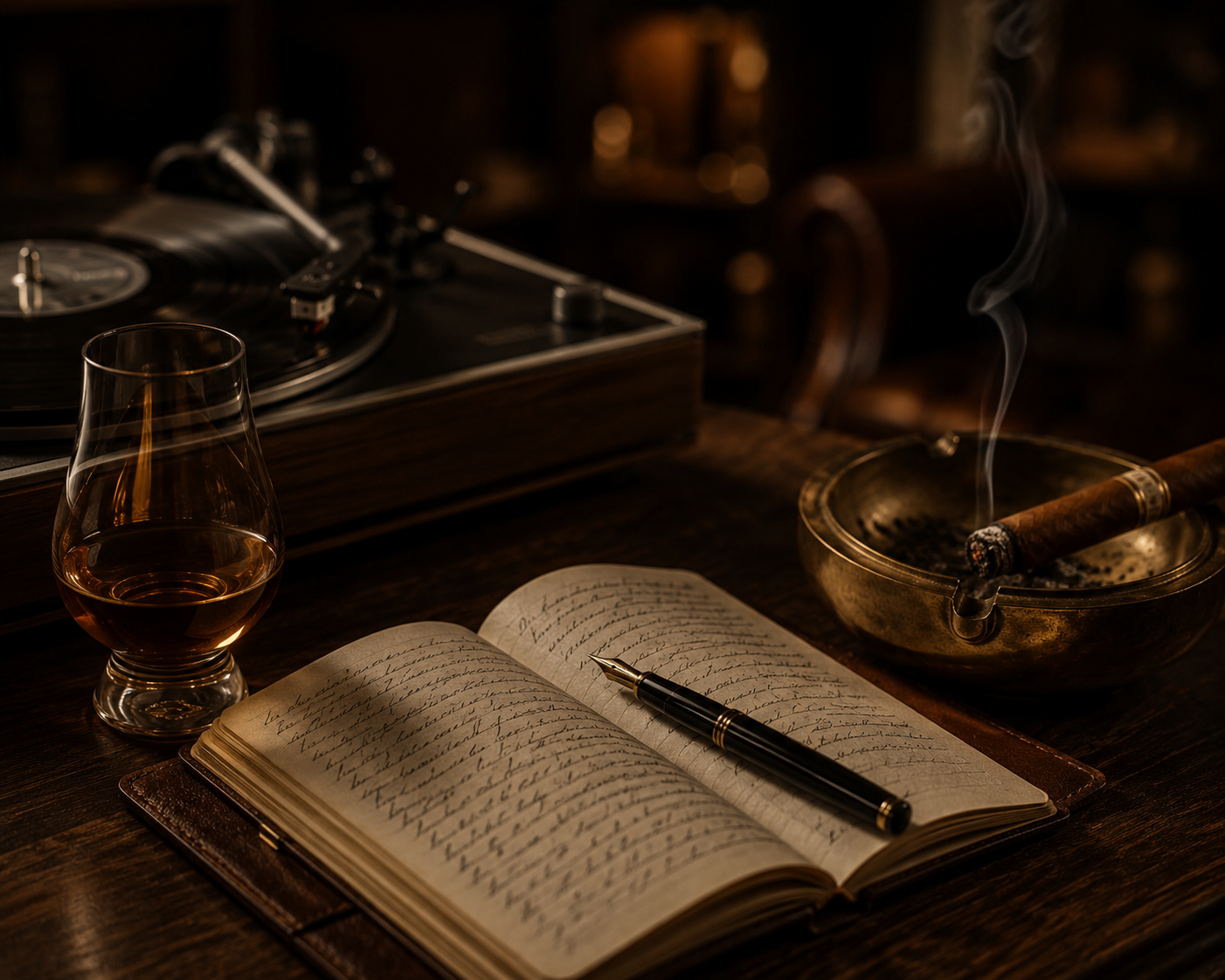
This is frequently dismissed as aesthetic preference. It is something deeper. Listening rooms and whiskey rooms share common ancestry. Both are environments built around focused attention. The modern world has transformed music into background noise. Songs accompany workouts, commutes, errands, and chores. Music remains present, but listening has become increasingly passive. The listening room preserves an older practice. It asks participants to sit down. To hear rather than merely listen. To notice.
The blues, in particular, thrives in this environment. A great blues recording rarely demands attention through spectacle. Its rewards emerge through patience. A subtle guitar phrase. A pause between notes. The rough edge in a singer's voice. The accumulated weight of experience carried in a single line.
These details reveal themselves only when someone slows down enough to notice them. The same could be said of a well-made bourbon. Both reward attentiveness. Both resist hurry. And both flourish within rooms intentionally designed for stillness.
There is another reason the whiskey room continues to resonate. It provides a home for one of the most endangered forms of craftsmanship in contemporary life: conversation. Conversation is often treated as something that simply happens. Historically, it was cultivated. The front porch encouraged it. The barber shop encouraged it. The lodge hall encouraged it. The neighborhood tavern encouraged it. The study encouraged it. Certain environments make meaningful conversation more likely. Others make it nearly impossible.
The whiskey room belongs to the first category. A well-designed whiskey room naturally slows the pace of interaction. The absence of distraction creates room for stories. The atmosphere rewards depth rather than speed. The conversations that emerge are often less transactional than those occurring elsewhere in life.
They wander.
They revisit old ground.
They uncover memories.
They allow silence without discomfort.
In an age increasingly dominated by short-form communication, such experiences possess genuine value. A good whiskey room is not measured by the bottles displayed on its shelves. It is measured by the conversations that remain long after the glasses have been emptied.
The most revealing aspect of the whiskey room may be what its continued popularity says about contemporary culture. Americans frequently lament the disappearance of gathering places. We speak of loneliness, fragmentation, and the decline of community. We discuss the loss of third places and the growing difficulty of finding environments conducive to meaningful connection. Yet at the same time, people continue creating such environments within their own homes. The whiskey room reflects this tension. It is private architecture attempting to solve a public problem.
People build these rooms because they are searching for something. Not necessarily better bourbon. Not necessarily status. Not necessarily luxury. They are searching for a place where conversation can occur without interruption. Where listening remains possible. Where hospitality can be practiced. Where reflection is not treated as wasted time.
The room itself becomes a statement. A declaration that some experiences deserve dedicated space. Perhaps that is the whiskey room's greatest lesson. Its value has very little to do with whiskey. Remove every bottle from the shelves and the room's essential purpose remains intact. The chairs still invite conversation. The records still invite listening. The atmosphere still encourages reflection. The room still asks people to slow down. That is what makes it significant.
In an age increasingly organized around speed, efficiency, and distraction, the whiskey room preserves an older understanding of what a room can be. Not every space must entertain. Not every space must produce. Not every moment must be optimized. Some places exist simply to help us pay attention.
The bourbon merely gives us a reason to enter.