The Heartbeat in the Floorboards: The Enduring Story of the Juke Joint
Imagine a dirt road in the Mississippi Delta in the early to mid-20th century. The air vibrates with music, laughter, and the promise of escape. Light spills from a ramshackle building, beckoning you closer. This is a juke joint – or was, and for generations of Black southerners, it was more than just a place to dance – it was a sanctuary.
Born from Labor, Raised on Rhythm
Emerging after emancipation, the juke joint was born from the need for autonomy and community. The word "juke," derived from the Gullah term "joog" or "jug," evokes the spirit of these spaces: to dance, to be rowdy, to live without apology. These makeshift venues sprang up near cotton fields, sawmills, and railroad camps, offering respite from the harsh realities of field work and segregation. Built from cypress, tin, and sheer determination, juke joints represented the earliest instances of Black economic and cultural independence in the rural South; spaces of joy and defiance.
“The juke joint was the first Black-owned cultural institution in the rural South.”
– Roger Stolle, blues historian, Clarksdale, MS
The Blues' Nursery and Pulpit
Before record labels and festivals, the juke joint was the incubator of the blues. Legends like Robert Johnson, Son House, Skip James, and Muddy Waters honed their craft within these walls, learning to command a crowd and translate raw emotion into song. The juke joint wasn't just a venue; it was a training ground. If a musician couldn’t make the crowd move, they didn’t get paid. The songs of longing, faith, and survival that shook those rooms became the bedrock of American popular music: soul, R&B, and rock and roll. Each Saturday night, across the Delta, the same sacred ritual played out: Shoes tapping on planks, smoke swirling through the lamplight, and someone shouting for “one more!” until sunrise.
A People's Sanctuary
But the juke was more than just music. Inside, these rickety walls offered something bigger: freedom. It was a refuge from white surveillance, church judgment, and economic despair. Laughter wasn’t a risk; voices could rise above the din of the day. Juke joints were equal parts church, club, and family reunion – places where working men found community, women owned the dance floor, and children learned rhythm by eavesdropping through cracks in the wall. It was a declaration: we are still here, and we still got soul.
Even as preachers condemned these spaces as dens of sin, jukes offered autonomy – a place outside white control where people could move freely and speak plainly. In a world designed to silence them, the juke joint gave working Black southerners a place to make noise.
Fading Light — and Flickers Still Burning
By the 1960s, the landscape changed. Rural labor declined, the Great Migration emptied towns, and electric blues headed north. The old juke shacks, never built to last, began to collapse or close. Some were torn down, others boarded up. Still, a few legendary names endured:
· Po’ Monkey’s Lounge (Merigold, Mississippi): The most famous, run by Willie “Po’ Monkey” Seaberry, stood in a cotton field outside Cleveland. When Po’ Monkey passed in 2016, the lights went dark.
· Do Drop Inn (Shelby, Mississippi): A once-vibrant community hub and legendary Juke Joint through the mid-century Delta era.
· Blue Front Café (Bentonia, Mississippi): Opened in 1948, is the oldest juke joint in Mississippi and the home of the haunting Bentonia blues style. Currently owned and operated by Bluesman Jimmy “Duck” Holmes, it still offers live blues in a legendary setting.
But the spirit of the Juke endures in the heart of the Mississippi Delta in two key places:
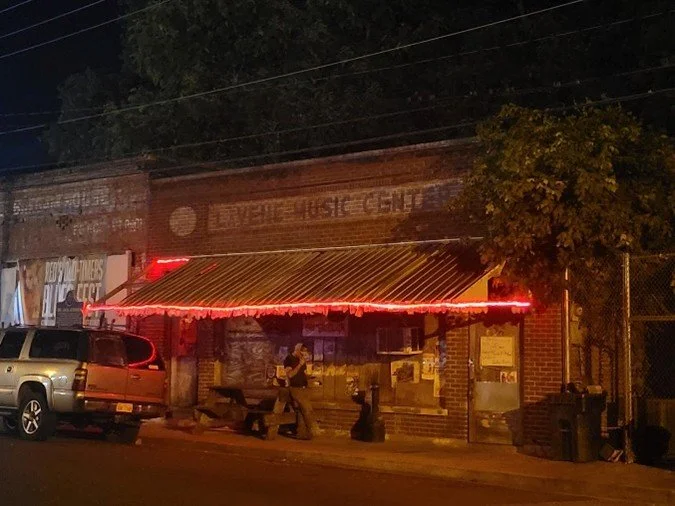
Red’s Lounge — Clarksdale, Mississippi
Red’s is the real deal. Sitting just off Sunflower Avenue and “Backed by the River, fronted by the Grave”, Red Paden’s lounge has been running since the early 1980s, and it’s the last of the true Mississippi jukes still in regular operation. Step inside and you’ll find Christmas lights strung across the low ceiling, folding chairs along the wall, and live blues so heavy it rattles the 40 oz beer bottles served ice cold from the cash bar. Up until his passing in Dec 2023, Red himself, larger than life, was usually at the door, greeting locals and travelers alike. The bands still play raw and loud, the crowd still dances close, and the spirit of the Delta still hums in every note. No stage, no pretense — just the blues, like it was meant to be heard.
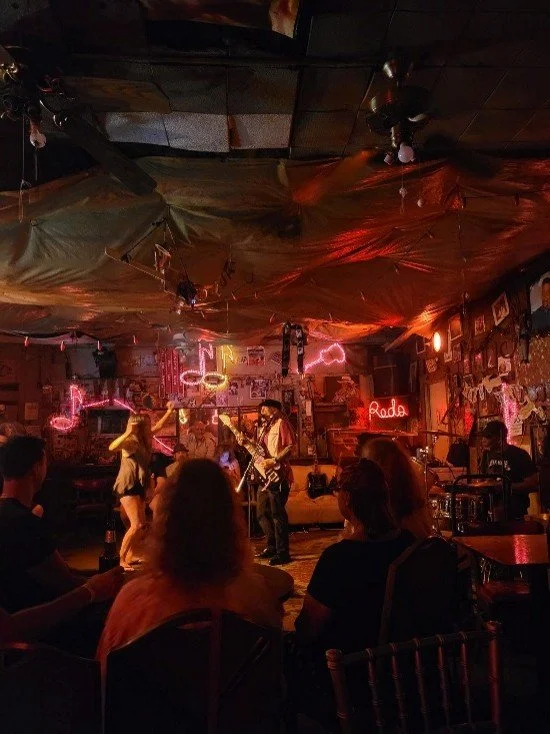
"One of last places in the United States to offer authentic Delta blues in its natural setting"
– The New York Times
Bad Apple Blues Club — Clarksdale, Mississippi
Just up the road on Issaqueena Ave, a newer chapter of the juke tradition thrives. The Bad Apple Blues Club, opened by local musician and preservationist Sean “Bad” Apple, isn't just a continuation of the legacy; it's a visceral experience. Don't let the somewhat dilapidated exterior fool you, nor the $10 cover charge deter you, because inside, Sean "Bad" Apple carries the torch with passionate reverence.
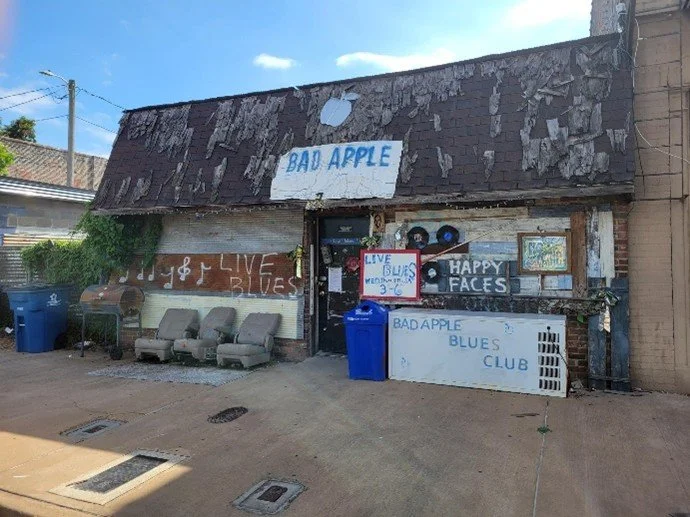
The Bad Apple is a classic Mississippi juke joint: think old living room furniture, maybe a collapsing ceiling tile or two, a roaming cat, and an air that's both authentic and unforgettable.
Sean, a superb musician and showman, often acts as a one-man band, serving as doorman, bartender, vocalist, drummer, historian, comedian, and raconteur. For that $10 admission, you're not just getting music; you're getting a show – a unique blend of virtuoso blues guitar, engaging anecdotes, and a deep-dive lesson into the history of the blues, all delivered with Sean's infectious love for the Delta. His sets, often woven with lengthy commentary, are a captivating blend of entertainment and education.
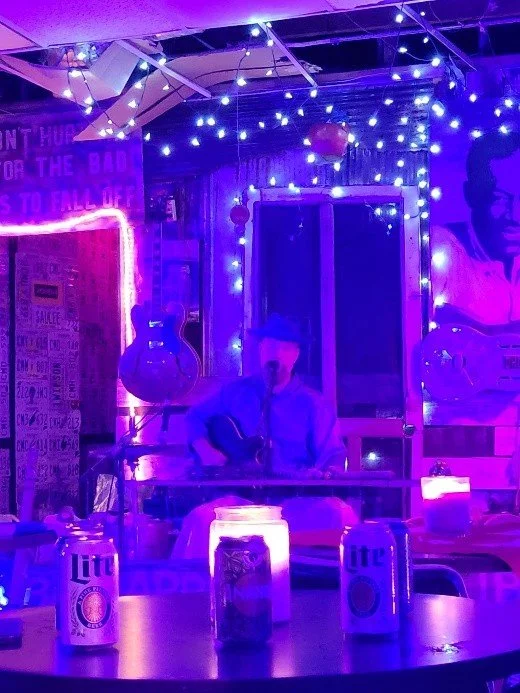
The Bad Apple is a bridge between past and present — proof that while the buildings may crumble, the spirit of the juke still finds a place to live, and thrive, in the heart of Clarksdale. You gotta see it to believe it.
The Enduring Meaning
To talk about juke joints is to talk about survival—about how joy itself can be an act of resistance. These places weren’t just entertainment; they were architecture of the spirit. Every stomp, every shout, every laugh was a way of claiming ownership over time, over space, over sound.
Their waning is a loss of a feeling -- a communal pulse between player and crowd, between pain and joy.
The Juke Joint isn't gone -- it's moved deeper into memory, music, and the marrow of American sound.
The juke joint was never just about the blues. It was about freedom — loud, messy, and alive.
The Juke Joint’s Legacy
· Birthplace of the Blues: The foundation for American popular music.
· Cultural Refuge: A space for self-expression under oppression.
· Community Economy: Owned and operated by locals, often women.
· Spiritual Continuum: The church had Sunday. The juke had Saturday.
The Echo That Remains
The jukes may be fewer, but their energy lingers. Somewhere, someone is still playing a 12-bar blues in a room that smells like stale beer, sweat and sawdust, and the lights are low enough to make you feel at home. That’s the spirit of the juke joint—not just a building, but a state of being. An inheritance carved from rhythm and resilience. A heartbeat in the floorboards that refuses to stop beating.